Emergency Support
If you or someone you know needs support, help is available.
For emergencies, call 000
- Lifeline
- Beyond Blue
- Women’s Domestic Violence Helpline
- Men’s Domestic Violence Helpline
- 13 Yarn
-
Alcohol and Drug Support
1800 198 024 (Regional callers)9442 500
- Financial Counselling Australia
When Adam first connected with Outcare through Drug Court, he was already doing the hard work of recovery. What he needed wasn’t someone to tell him what to do — he needed someone who understood what it was like to rebuild a life while carrying the weight of addiction, parenting, housing uncertainty and the challenges of starting over.
The Drug Court program supports people experiencing substance use challenges who are involved in the justice system, with lived-experience peer workers walking alongside participants to provide practical guidance, encouragement and connection.
For Adam, the journey wasn’t straightforward.
After leaving residential rehabilitation early due to family circumstances, he was referred to Outcare. While he had already achieved a period of abstinence and developed valuable recovery tools through rehabilitation, he was not initially eager to engage with peer support.
Like many people entering a new support service, trust needed to come first.
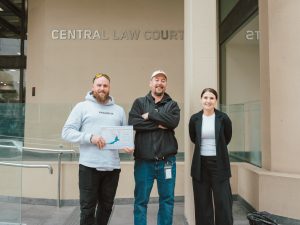
Finding Common Ground
Rather than beginning with formal appointments or structured interventions, the relationship started through informal conversations at court.
Over time, those conversations revealed something important. Adam and his peer worker shared a number of life experiences. Both were single fathers. Both understood the challenges of navigating family court processes. Both had experienced the uncertainty of trying to secure stable housing while caring for children. Both knew what it felt like to balance parenting responsibilities with the desire to build a better future.
Those shared experiences created a foundation that professional expertise alone cannot always provide. The conversations became less about programs and referrals, and more about understanding. More importantly, they became a reminder to Adam that he wasn’t facing these challenges alone.
Support Beyond Recovery
While Adam was managing his recovery well, other barriers stood in the way of long-term stability.
Housing was one of them. Through peer support, he received assistance in understanding the priority housing process, including guidance on preparing support letters and identifying key information needed to strengthen his application.
Financial hardship was another challenge. Support was provided to help Adam register with Foodbank, ensuring he could access essential supplies while working towards greater stability.
When Adam began planning for his future beyond Drug Court, education became a key focus. He enrolled in a Certificate III in Alcohol and Other Drugs and was provided with a laptop to support his studies.
Because his peer worker had previously navigated study as a parent, there was an opportunity to share practical insights about balancing family responsibilities, coursework and recovery.
These were not simply services or referrals. They were conversations grounded in lived experience.
Conversations that said,“I’ve been there too.”
The Result
Ten months after beginning Drug Court, Adam graduated — one of the quickest possible completion timeframes within the program. More importantly, the outcomes extended far beyond graduation. Today, Adam has:
- Maintained ten months of abstinence.
- Regained custody of his daughters.
- Secured placement on the priority housing waitlist.
- Enrolled in further study.
- Identified a potential career pathway in the alcohol and other drug sector.
- Continued building a stable and positive future for himself and his family.
More Than One Challenge
Adam’s story highlights something important about recovery.
Substance use challenges rarely exist in isolation. For many people, addiction intersects with other experiences such as homelessness, family breakdown, mental health challenges, financial hardship and social isolation. This is why lived-experience peer support can be so powerful.
The value isn’t only in understanding recovery from alcohol and other drug use. It’s also in understanding the broader realities that often sit alongside it.
- The challenges of finding stable housing.
- The realities of parenting through difficult circumstances.
- The uncertainty of returning to study.
- The process of rebuilding confidence and identity after adversity.
When peer workers bring experience across these co-occurring challenges, they can offer a unique form of support that helps people see not only where they are, but what might be possible next. While peer support played a role in Adam’s journey, the achievements belong to him.
His graduation reflects the determination, resilience and commitment he demonstrated every day over the past ten months. Today, he is not defined by his past, but by the future he is actively creating for himself and his daughters. And that future looks brighter than ever.


